
A new driveway installation involves much more than laying the finished surface. Assessment, removal, foundations, levels, drainage and finishing details all form part of the work. This guide explains the main stages and what to discuss with your installer before the project begins.
What Happens During a Driveway Installation?
The sequence depends on the property, selected surface and agreed construction. A complete replacement involves different work from an installation that retains a suitable existing base.
At Driveways 4 You, we assess the property and discuss the proposed layout before providing a quotation. Our experienced in-house team carries out the installation, with no subcontractors involved.
The Main Installation Stages
| Stage | What Is Considered |
|---|---|
| 1. Site assessment | Existing construction, measurements, access, levels and intended use. |
| 2. Design and quotation | Surface choice, layout, drainage, borders and agreed installation scope. |
| 3. Site arrangements | Parking, pedestrian access, deliveries and protection of retained features. |
| 4. Removal and excavation | Taking up the agreed existing surfaces and preparing for construction. |
| 5. Foundations and drainage | Installing the specified supporting layers and drainage works. |
| 6. Edging and features | Coordinating borders, steps, paths and planting areas with finished levels. |
| 7. Surface installation | Laying the chosen system in accordance with its requirements. |
| 8. Completion and handover | Checking the agreed work and explaining use, care and warranty information. |
1. Assessing the Existing Driveway
The assessment begins with the property as it is. Tell us about uneven areas, water collecting after rain, difficult access or features you would like to change.
We discuss the driveway dimensions, parking requirements and the route to the front door. Existing walls, planting, steps and adjoining paths also need to be considered.
Photographs and approximate measurements are useful for an initial conversation, but the quotation needs to reflect the actual site and proposed work.
2. Agreeing the Design and Quotation
Choose the main surface alongside its borders and entrance details. Confirm the layout before installation, particularly where paths, planting areas or steps are changing.
The quotation should explain what will be removed, retained and constructed. Ask for the materials, drainage works and separately priced features to be clearly identified.
Our driveway quotation checklist explains the details worth checking before accepting a proposal.
3. Preparing for Work at Your Home
Agree practical arrangements with the installer before the start date. These may include:
- Where your vehicles will be parked during the work
- How you will access the house
- Any particular mobility or household access needs
- Delivery and collection arrangements
- Features, plants or equipment that need to be moved
- Which existing surfaces and garden features will be retained
- Who to contact if a question arises
Let the team know about relevant information you hold on underground services or previous work. Keep children and pets away from the working area and follow the access arrangements agreed with the installer.
4. Removing the Old Surface
For a complete replacement, the agreed existing materials are removed. These might include old tarmac, concrete, paving or garden areas within the new layout.
Once the surface is opened up, the condition beneath it can be assessed more closely. If unexpected conditions affect the proposed work, any necessary change should be discussed and recorded.
The quotation should establish how excavation and removal of materials are included or priced.
5. Preparing the Foundations
The supporting construction is prepared for the chosen surface and intended use. The specified sub-base is installed and compacted as required by the agreed design.
Different sites and surfacing systems can need different construction details. Ask about the materials and proposed compacted depths rather than relying on a general description such as “new base”.
Our sub-base preparation guide explains why foundation work deserves attention when replacing an uneven driveway.
6. Establishing Levels and Drainage
The proposed levels need to work with doorways, garage entrances, steps and adjoining surfaces. Drainage arrangements should be coordinated with these levels before the final surface is laid.
Ask how water will move across or through the proposed construction and where it will go next. Any additional channels or other drainage works should be identified in the installation scope.
Read our driveway drainage guide for the main questions to discuss.
7. Installing Borders, Steps and Other Features
Edging and finishing features are installed at the appropriate stage for the selected construction. Their position and levels need to be coordinated with the driveway surface.
Granite borders, entrance bands, steps and planting-area risers can all contribute to the finished appearance. Confirm their materials and dimensions before the work reaches this stage.
Our granite driveway features guide explains the different details and what to agree.
8. Laying the Chosen Surface
The installation method depends on the selected system. Your quotation should identify the proposed surface and the construction that supports it.
| Surface | What to Confirm Before Installation |
|---|---|
| Tarmac | The agreed material, layers, compacted thicknesses and connections with edging. |
| Resin-Bound | The supporting base, resin product, aggregate blend and application requirements. |
| Block Paving | The product, approved laying pattern, bedding, jointing and edge construction. |
| Gravel | The selected stone, specified surface depth and retention details. |
Before laying begins, confirm that the selected colour or product matches the agreement. Keep any approved samples and product names with your project records.
Real Example: Bawnville Road, Tallaght
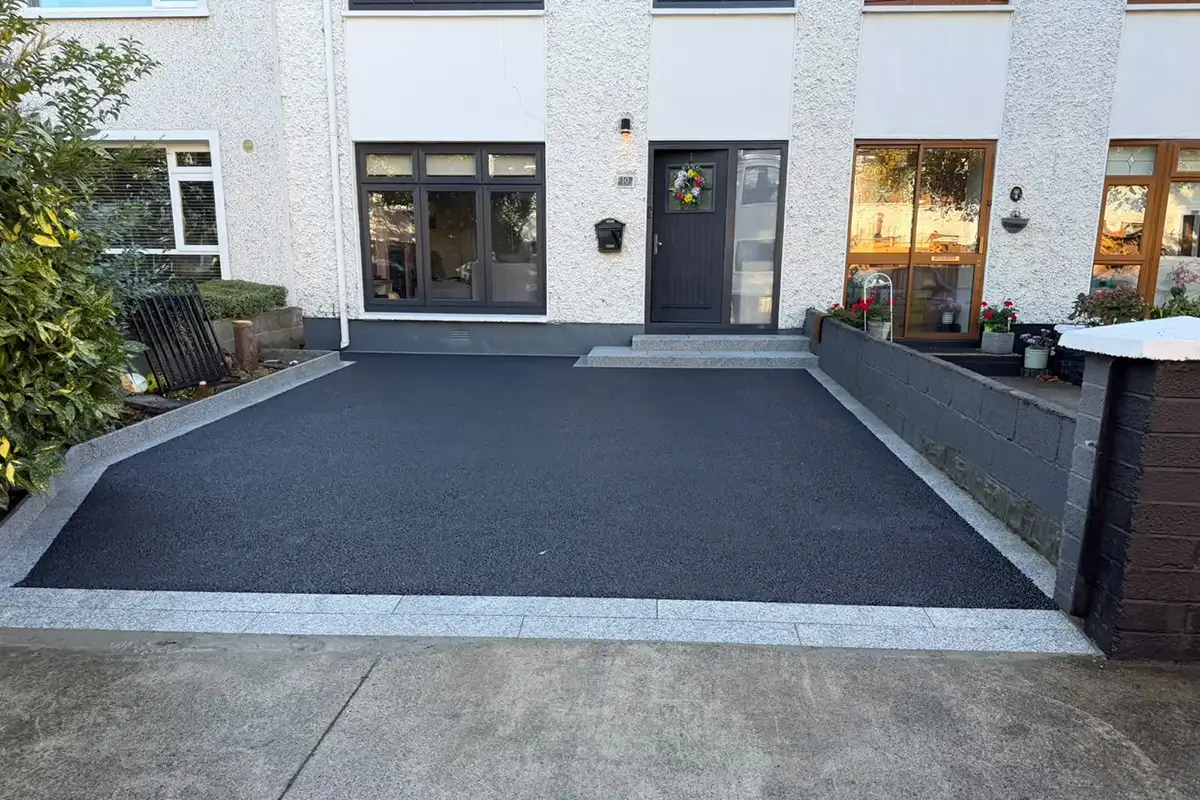
Our Bawnville Road project shows several stages of a complete driveway transformation.
The existing cobblelock had become uneven and spread apart, allowing weeds to establish between the blocks. It was removed before preparation began for the new driveway.
The work included sub-base installation, suitable falls, silver granite framing, planting-area risers and a matching entrance step. The new tarmac surface completed the installation.
The before, preparation and completed photographs help show the work involved beyond the visible finish.
How Long Will the Installation Take?
The programme depends on the driveway size, access, removal work, ground conditions, selected surface and finishing details. Weather and material requirements can also affect the sequence.
Ask for an expected programme following the assessment, including any periods when the driveway must remain unused. A general online estimate cannot account for every property.
Keep in contact with the installer if household arrangements depend on a particular date.
When Can You Walk or Park on the New Driveway?
Follow the instructions supplied for your installation. Do not assume that a surface is ready for vehicles because it looks finished or feels firm.
Confirm separately when pedestrian access, parking and heavier deliveries are permitted. Any restrictions should be explained at handover.
If a skip, building work or a substantial delivery is planned soon afterwards, discuss it with the installer first.
Completion and Handover
At completion, review the agreed work with the installer and raise any questions about the finished layout or details.
Ask for:
- Instructions on when the driveway can be used
- Cleaning and maintenance guidance
- The selected product details
- Applicable written warranty terms
- Information about drainage maintenance
- A contact for aftercare questions
Keep these records alongside the quotation, invoices and any agreed changes.
Looking After the Finished Driveway
Use the aftercare guidance for the actual surface installed. Our blog also provides practical information for resin-bound driveways, gravel driveways and block paving.
If you notice a change, take clear photographs and contact the installer before attempting an unfamiliar treatment or repair.
Planning Your New Driveway
Driveways 4 You installs tarmac, resin-bound, gravel and block paving driveways, with work carried out by our own experienced team.
Contact us with your location, photographs and a description of the changes you would like to make. We can arrange a site visit and discuss the preparation, layout and finish required for your property.



 CHAT

