
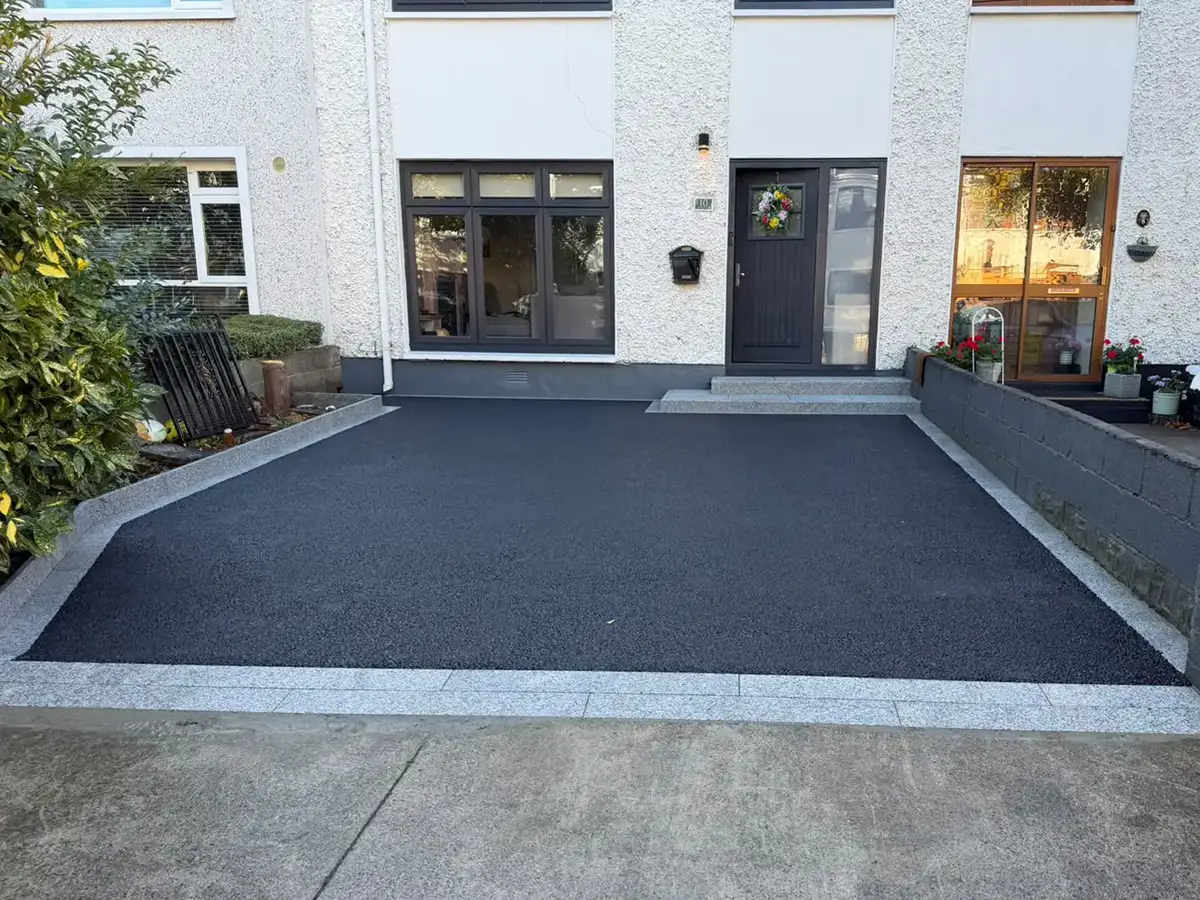
Can an old tarmac driveway take a new surface, or does it need to be dug out and replaced? The answer depends on what has failed, how well the driveway drains and whether a new layer will fit the levels at your house, garage and pavement.
When Can an Old Tarmac Driveway Be Resurfaced?
Resurfacing may be an option when the wear is mainly at the surface and the driveway underneath is still stable. A faded finish or worn texture can look worse than it is. By contrast, areas that have dipped, moved or repeatedly cracked need a closer look before you commit to a new surface.
Start at the front door and work towards the pavement. Check the garage threshold, entrance step, drains and any adjoining paths. Even if the base is sound, adding a layer can change how the driveway meets those features. A contractor should explain how the finished levels will work before recommending an overlay.
Is a Patch Repair Enough?
If the problem is confined to one small area and the surrounding driveway is firm, a local repair may be enough. Ask what caused the damage and what the repair will involve. For example, an edge that breaks away repeatedly may need support at the edge as well as new material on top.
A patch can remain visible beside older tarmac. If you mainly want to make the entrance usable again, that may be an acceptable trade-off. If you want an even appearance across the whole driveway, discuss resurfacing once the cause of the damage has been assessed.
When Is Replacement the Better Option?
Several dips, patches that keep failing and areas that move under load are reasons to investigate what is happening below the surface. A new top layer won’t correct movement in the foundation. Replacement is also worth discussing if you want to widen the driveway or change levels that currently leave rainwater collecting near the house.
At Bawnville Road in Tallaght, the existing cobblelock had spread and become uneven. Our team removed it, prepared and compacted a new sub-base, and set the falls before laying the tarmac. It’s an example of a driveway where the important work happened before the new surface went down.
What Should a Driveway Contractor Check Before Quoting?
- The existing surface: Is the damage isolated, or does it suggest movement underneath?
- Finished heights: How will the surface meet the front step, garage, pavement and adjoining paths?
- Drainage: Where does rainwater go now, and will the proposed work change that?
- The scope: Does the quote cover a patch, a new surface over the existing driveway, or removal and a new foundation?
Ask for that scope in writing. A price for resurfacing and a price for excavation and rebuilding cover different work. Our Dublin tarmac driveway cost guide explains what is included in our guide prices for a new installation.
What Photos Help Before a Site Visit?
Take one photo from the pavement, one looking back towards the entrance and a close-up of the worst area. If water collects after rain, a photo of the puddle can show where it sits relative to the house, garage or drain. Photos help us understand what you’re seeing; the site visit lets us assess what work is needed.
If you’re weighing up your options, see our tarmac driveway installation service in Dublin or request a free quote so we can assess the driveway with you.



 CHAT

