
Resin-bound surfacing can sometimes be laid over an existing tarmac or concrete driveway, provided the base is suitable. Before recommending an overlay, the existing construction needs to be assessed for stability, damage, drainage and finished levels. A new resin surface cannot compensate for an unsuitable foundation.
Keeping a suitable existing base may reduce the amount of removal and groundwork required. However, covering a driveway that is sinking, breaking apart or holding water can leave the underlying problems unresolved.
This guide explains what needs checking before deciding whether to retain your existing driveway or prepare a new base for a resin-bound installation.
Can Resin Be Laid Over an Existing Driveway?
Yes, in some circumstances. Tarmac, asphalt and concrete can provide a base for resin-bound surfacing when their construction and condition are suitable for the intended use.
The assessment should consider the driveway’s foundations, any movement or deterioration, drainage arrangements and the additional height of the proposed resin finish.
For a driveway used by vehicles, the retained construction also needs to support the expected traffic.
| Existing Surface | Possible Approach | What Needs Checking? |
|---|---|---|
| Sound tarmac or asphalt | May be suitable for an overlay following assessment and preparation. | Stability, foundations, drainage and finished levels. |
| Sound concrete | May be suitable with appropriate preparation and joint details. | Cracks, movement joints, drainage and thresholds. |
| Sinking or deteriorating tarmac | May require removal and reconstruction. | The cause and extent of deterioration. |
| Loose or uneven block paving | Requires a suitable replacement base rather than a direct overlay. | Movement of individual blocks and joints. |
| Loose gravel or granular sub-base | Requires a suitable supporting base for a standard resin-bound driveway system. | Compacted loose material alone is not normally a suitable direct laying surface. |
Five Checks Before Laying Resin Over an Existing Surface
1. Stability and Movement
Sunken areas, recurring depressions, loose material and changes in level can indicate that the existing driveway needs more extensive work.
Covering the surface does not establish whether the construction underneath is sound. Where there are signs of movement, the cause needs investigating before deciding what can be retained.
2. Cracks and Concrete Joints
Cracks need assessment rather than being treated as something the resin will automatically conceal. The appropriate preparation depends on their condition and cause.
Required concrete movement joints should be continued through the resin finish using a suitable detail, following the selected system’s requirements.
3. Drainage and Standing Water
Check where rainwater currently travels and whether any areas remain wet after rainfall. The new finish needs to work with the drainage arrangement for the complete driveway.
Our driveway drainage guide explains why falls, outlets and surrounding property levels need to be considered together.
4. Doorways, Steps and Finished Levels
An overlay adds height. The proposed finished level needs checking against door thresholds, garage entrances, gates, paths, steps and drainage channels.
Existing edging also needs to suit the new construction so that the completed driveway meets adjoining surfaces neatly.
5. Surface Preparation
The retained base needs appropriate preparation for the selected resin system. This includes addressing unsuitable areas and removing contamination, loose material and organic growth.
The base must meet the system’s requirements for condition and dryness before installation. Any required primer or joint treatment should follow the manufacturer’s instructions.
Can Resin Be Laid Over Old Tarmac?
An existing tarmac driveway may be suitable when it remains sound and its construction can support the proposed installation and continued vehicle use.
Areas that are crumbling, soft, heavily patched or visibly sinking need closer assessment. The recommendation may be to retain the base, carry out specified preparation or remove unsuitable construction and start again.
The important question is whether the driveway provides a dependable base. Its age or appearance alone does not answer that question.
Can Resin Be Laid Over Concrete?
Concrete can also be considered, but its condition, joints and drainage need particular attention. The assessment should establish whether the slab is stable and whether its preparation and detailing are compatible with the resin system.
Where concrete already sits close to a doorway, garage threshold or adjoining path, there may be limited room for the additional build-up.
Will the Driveway Become Permeable?
A resin-bound surface does not automatically make the whole driveway permeable. Water movement depends on the construction beneath it as well as the visible finish.
If the retained base does not allow water to pass through, adding a porous surface above it does not change that base into a permeable one. The installation therefore needs a suitable drainage arrangement.
Ask how water will leave the completed driveway and what drainage work is included in the quotation.
When Is a New Base the Better Option?
Removal and reconstruction may be more appropriate where the existing driveway cannot provide a suitable foundation or where levels and drainage need substantial changes.
- The existing surface is sinking or moving.
- Large areas are deteriorating or breaking apart.
- The construction is unsuitable for the expected vehicle use.
- Drainage problems require changes beneath the surface.
- An overlay would create unsuitable levels at entrances or adjoining areas.
- The existing surface consists of loose paving blocks or another unsuitable laying surface.
Our guide to why driveways sink and why sub-base preparation matters explains the importance of resolving foundation problems before installing a new finish.
A New Base for Our Diswellstown Resin Project
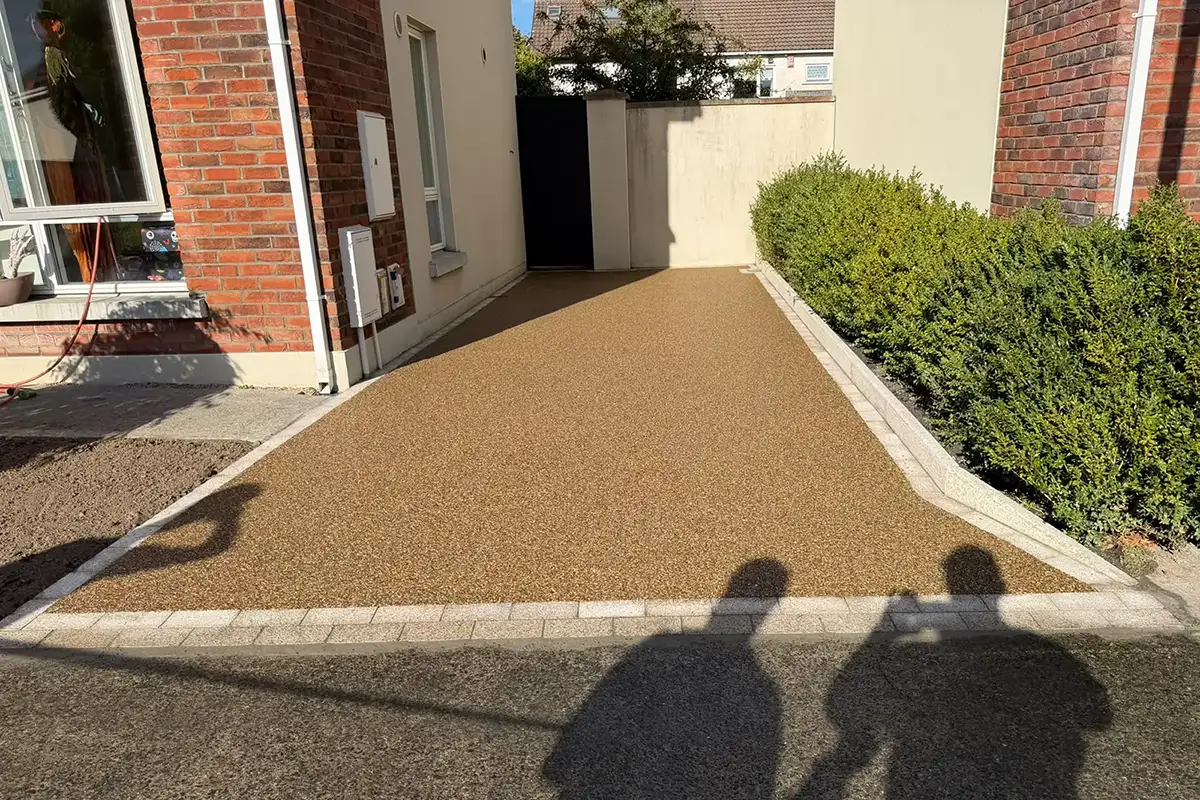
At our resin driveway project in Diswellstown, Castleknock, the old cobblelock had loosened and spread, leaving gaps where weeds could grow.
The old paving was removed and the underlying preparation and falls were addressed. A new tarmac base was installed below the level of the new granite frame, with granite risers defining the planting area.
The driveway was then finished in Anchor Bay resin-bound aggregate.
The base shown in this article’s photograph was newly installed for that project. It illustrates the preparation of a new supporting surface before the resin finish is laid.
Does Retaining the Base Reduce the Price?
Retaining a suitable base may reduce some removal and construction work. Preparation, joint details, drainage changes, edging and access can still affect the quotation.
Driveways 4 You’s €150–€200 per m² guide range is for a complete resin driveway installation, including excavation, preparation, standard sub-base build-up, the resin-bound surface and labour. It should not be treated as a separate overlay-only rate.
For example, a 50m² driveway gives an indicative complete-installation budget of €7,500–€10,000 using that range. Your quotation will reflect the work required at your property and any separately priced finishing details.
See our 2026 resin driveway cost guide for example budgets and factors affecting the price.
Questions to Ask Before Agreeing to an Overlay
- What assessment has been made of the existing base?
- Are there signs of movement or deterioration?
- What preparation and joint details are required?
- Will the finished height work at doors, gates and steps?
- How will rainwater leave the completed driveway?
- What happens if unsuitable construction is uncovered?
- Does the quotation describe what will be retained, removed and installed?
Having these points set out helps you compare proposals and understand what your quotation covers.
Discuss Your Resin Driveway With Driveways 4 You
We install resin-bound driveways across Dublin, with work carried out by our own experienced team from preparation through to completion.
A site visit allows us to assess your existing driveway, discuss whether its base can be retained and plan the finish, levels, edging and drainage.


 CHAT

