
A new tarmac driveway needs some care when it first comes into use. Knowing when to return your car, how to manoeuvre and what to do about spills helps you look after the finished surface from the beginning.
The most important starting point is the aftercare guidance provided for your installation. The surfacing material, weather and intended use can affect the advice, so do not assume that a parking time given for another driveway applies to yours.
This guide covers the questions to ask at handover and the everyday habits that can help protect your new driveway.
When Can You Park on a New Tarmac Driveway?
Wait until your installer confirms that the driveway is ready for vehicles. Ask for a clear instruction before the team leaves, including whether pedestrian access can resume earlier.
A surface that looks finished is not an invitation to start using it immediately. Keep vehicles off until the agreed time, and contact your installer if you are unsure.
Before installation begins, arrange alternative parking and tell other household members when they can return. Remember visitors, deliveries and anyone else who might drive onto the property.
| What to Confirm | Question to Ask |
|---|---|
| Walking access | When can we walk across the finished driveway? |
| Parking | When can our vehicles return, and are there any initial restrictions? |
| Manoeuvring | What precautions should we take when turning or parking? |
| Heavy loads | Is the driveway suitable for our van, trailer or proposed deliveries? |
| Cleaning | Which cleaning methods and products are suitable? |
| Aftercare contact | Who should we contact if we notice a mark or have a question? |
Take Care When Turning and Parking
Turning the steering wheel while the vehicle is stationary can scuff asphalt, particularly when it is new or warm. Once vehicle use has been approved, steer while moving gently where it is safe to do so, and avoid tight, repeated turning in one spot.
Consider your parking arrangement before the driveway is installed. A layout that allows comfortable entry and exit can reduce awkward manoeuvres and make daily use easier.
If your entrance is narrow or vehicles need to turn within the driveway, discuss that during the site visit.
Be Mindful of Warm Weather
Asphalt can become more susceptible to marking in hot conditions. Take extra care with turning tyres and concentrated loads, and seek advice if the surface appears unusually soft.
If you have recently received aftercare instructions and the weather changes significantly, contact your installer before assuming the original arrangements still apply.
Protect Against Concentrated Loads
Ladder feet, motorcycle stands, caravan supports and similar objects concentrate weight onto small areas. Suitable load-spreading protection may be needed; ask before placing these on the surface.
Tell your installer about any regular use beyond ordinary car parking. This includes trailers, caravans and heavier vehicles, so the proposed construction and aftercare can be discussed before work begins.
Deal With Oil and Fuel Spills Promptly
Oil and fuel can soften asphalt. Absorb spills promptly with a suitable absorbent material rather than washing them into drains. Remove the contaminated material and dispose of it appropriately.
Ask for advice before applying cleaners. Solvents and some cleaning products can affect the surface.
If a vehicle has a recurring leak, address the source rather than allowing repeated contamination. Tell your installer if the affected area feels soft or begins to break apart.
Keep Routine Cleaning Gentle
For routine care, start with the cleaning method recommended at handover. Regularly remove leaves and loose debris, and ask which brush and cleaning products suit your surface.
Check before using a pressure washer, especially on a recently installed driveway. Do not assume that a method suitable for paving blocks or concrete is suitable for tarmac.
When asking about a stain, send a photograph and explain what caused it, if known. That gives your installer more useful information than trying several products first.
Keep Drainage Routes Clear
Include drainage channels, outlets and the surrounding edges in your regular checks. Remove accessible leaves and loose debris using the recommended method.
Notice how the driveway behaves after rainfall. If water begins collecting somewhere it did not previously, take photographs and ask for advice.
Our driveway drainage guide explains why surface levels and drainage arrangements need to be considered together.
Plan Ahead for Deliveries and Building Work
If you are arranging other work at the property, tell those contractors that the driveway is newly installed.
Discuss delivery vehicles, skips, machinery and material storage with your driveway installer before allowing them onto the surface. Agree any protection needed and who will arrange it.
Keep the driveway clear of building materials where possible. Planning deliveries and storage in advance is easier than dealing with damage or contamination afterwards.
What if You Notice a Mark or Loose Material?
Contact your installer before attempting a repair or applying a surface treatment.
Useful information to provide includes:
- A close-up photograph and a wider view showing the location.
- When you first noticed the issue.
- Whether it followed parking, a delivery or a spill.
- Whether the appearance has changed.
- Any relevant weather conditions.
A photograph may help with an initial discussion, although a site inspection may be needed to understand the cause. Keep a record of the advice you receive.
Do You Need to Seal a New Tarmac Driveway?
Do not add a sealer or coating simply because a product is advertised for driveways. Check with your installer before applying any treatment to the new surface.
Ask whether treatment is needed at all, whether the proposed product is compatible and whether it would affect your installation’s aftercare or warranty terms.
Follow the advice for the actual surfacing installed rather than a general maintenance schedule found online.
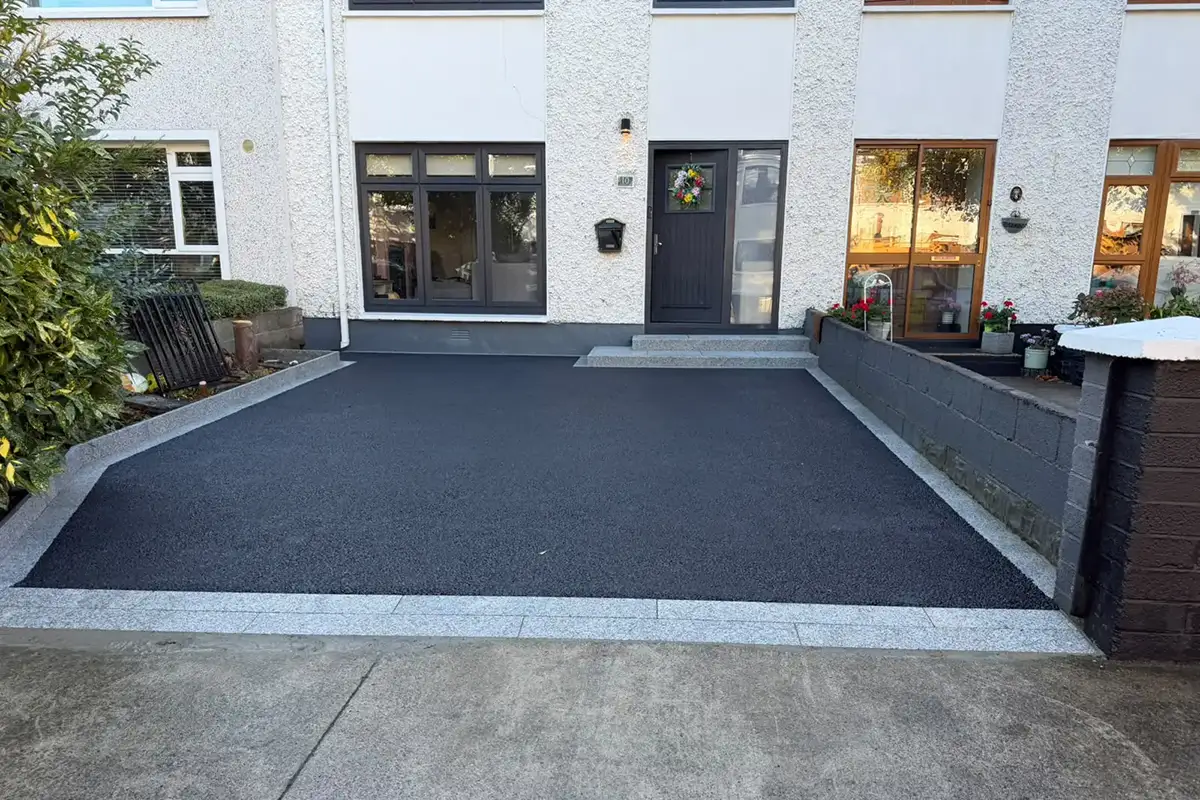
A Completed Driveway on Bawnville Road, Tallaght
The full article photograph shows our completed tarmac driveway on Bawnville Road, Tallaght.
The old cobblelock had become uneven and separated, allowing weeds to grow through the gaps. It was removed before the ground was prepared and a new sub-base installed with attention to the falls.
Silver granite blocks framed the driveway, with matching planting-area risers and a new silver granite entrance step. The installation was then finished in tarmac.
The project brings together groundwork and finishing details. Aftercare helps the homeowners look after that completed installation as it comes into everyday use.
A Simple Ongoing Care Routine
- Follow the handover instructions: Keep them somewhere accessible and share them with anyone using the driveway.
- Remove loose debris: Use the cleaning method recommended for your surface.
- Check for leaks: Attend to vehicle leaks and spills promptly.
- Watch drainage: Keep accessible channels clear and report changes in water movement.
- Plan unusual loads: Ask before allowing skips, machinery or heavy deliveries onto the driveway.
- Raise concerns early: Contact your installer before attempting treatments or repairs.
How Long Should a Tarmac Driveway Last?
Aftercare is one part of long-term performance. Ground conditions, preparation, drainage, materials, construction and the way the driveway is used also matter.
Read our guide to tarmac driveway lifespan for a broader explanation of those factors.
If you are still planning an installation, our 2026 tarmac driveway price guide explains our guide prices and what to consider when budgeting.
Advice for Your Driveways 4 You Installation
If Driveways 4 You has installed your driveway and you have a question about parking, cleaning or its condition, contact us for guidance about your particular installation.
For homeowners planning a new driveway, our tarmac installation service is carried out by our own experienced team, from preparation through to completion.




 CHAT

