
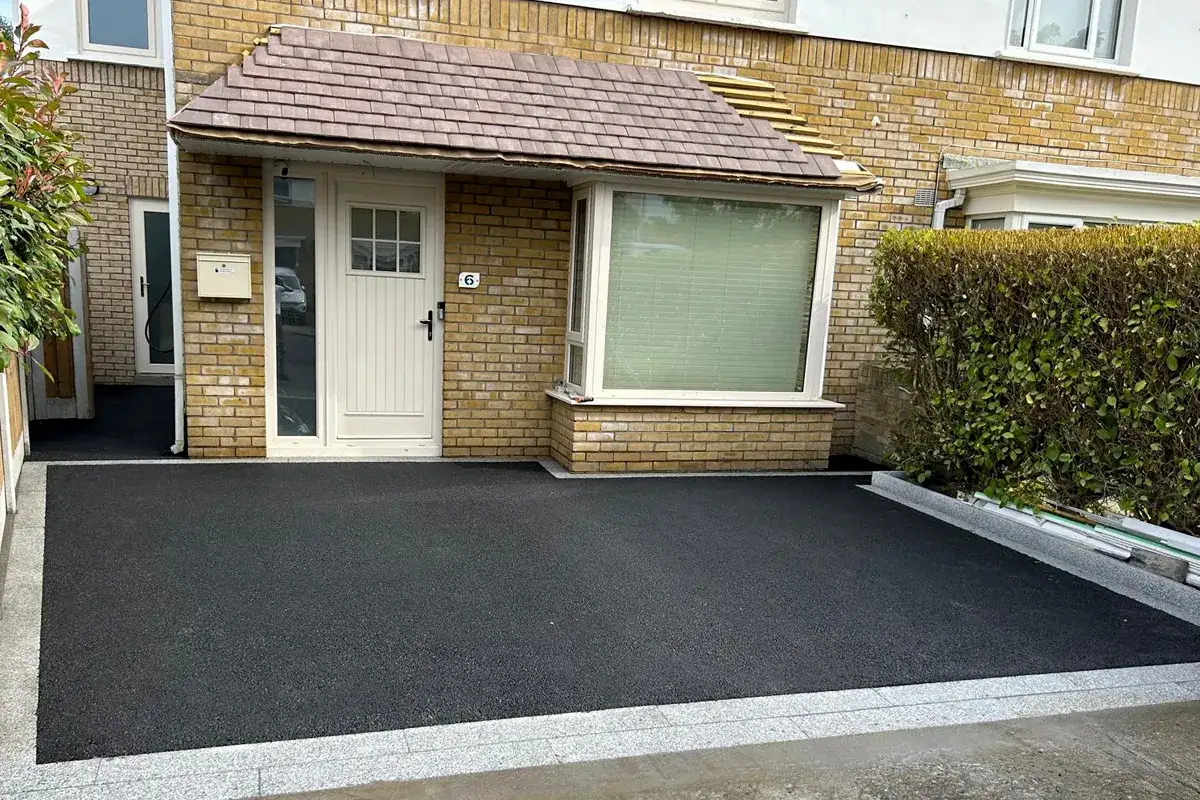
A properly installed tarmac driveway can often provide around 15–20 years of service, although its actual lifespan depends on the foundation, drainage, materials, vehicle use and maintenance. Here is what Dublin homeowners should look for when planning a new driveway or assessing an existing one.
How Long Should a Tarmac Driveway Last?
Around 15–20 years is a useful general guide for a well-constructed domestic tarmac driveway. Some driveways remain serviceable for longer, while others develop problems much earlier because of unsuitable foundations, poor drainage or damage.
This is an indicative lifespan, not a guarantee or a fixed replacement date. The condition of the driveway matters more than its age alone.
It is also useful to distinguish between the visible surface and the underlying construction. A worn surface does not always mean the entire foundation has failed, while a relatively new surface can still develop problems if the ground beneath it moves.
What Makes a Tarmac Driveway Last?
The finished tarmac is only one part of the installation. Its performance depends on the ground beneath it, the preparation work and how the driveway will be used.
1. A Stable, Properly Prepared Foundation
The ground must provide suitable support for the finished driveway. Depending on the existing conditions, this can involve removing the old surface, excavating unsuitable material and installing a properly compacted sub-base.
If weak areas are left beneath the driveway, they can contribute to settlement, depressions and cracking. Covering an unstable foundation with a new surface does not remove the underlying problem.
2. Levels and Drainage That Work Together
Water needs a suitable route away from the driveway and vulnerable areas around the property. Persistent pooling or water entering weakened areas can contribute to deterioration.
Levels, falls, drainage channels and outlets should be considered before the surface is laid. Existing doorways, paths, boundaries and the road entrance all affect the design.
3. Materials Suited to the Intended Use
A driveway used for family cars has different demands from an area regularly used by heavy vehicles. The proposed construction should reflect the expected loading and the ground conditions.
Discuss regular van parking, deliveries, trailers or other heavier use during the site visit so these requirements can be considered before installation.
4. Careful Installation and Finishing
Accurate preparation, suitable materials, compaction and attention to edges and transitions all contribute to a professionally finished driveway.
At Driveways 4 You, installations are completed by our own experienced team, with no subcontractors, from the initial ground preparation through to the finished surface.
Warning Signs Your Driveway Needs Attention
Small changes are easier to assess when noticed early. Look for the following signs during routine cleaning and after wet weather:
- Persistent standing water: pooling that repeatedly occurs in the same place may indicate a problem with levels, settlement or drainage.
- Cracks that widen or spread: these should be assessed, particularly where several cracks develop together.
- Depressions or wheel tracks: local sinking can indicate movement or insufficient support beneath the surface.
- Loose aggregate or crumbling edges: noticeable material loss deserves attention, especially where it is becoming worse.
- Soft or damaged areas following a spill: oil and fuel can affect asphalt surfaces.
- Raised areas near trees: roots or other ground movement may be affecting the driveway.
These signs do not all have the same cause or require the same solution. A surface inspection can help establish whether the issue is localised or connected to the underlying construction.
A Practical Tarmac Driveway Care Checklist
A simple routine can help keep the driveway clean and make developing problems easier to spot.
Sweep Away Leaves and Debris
Remove leaves, soil and loose debris regularly, particularly around edges and drainage channels. Pay extra attention during autumn and after windy weather.
Keep Drainage Features Clear
Check that channels, gullies and accessible outlets are not blocked by leaves or sediment. If water repeatedly collects despite the drainage being clear, have the cause assessed.
Use Suitable Cleaning Methods
Choose cleaning products and methods intended for asphalt surfaces. Follow the product instructions and your installer's advice. Avoid aggressive cleaning that loosens material or damages the surface.
Deal with Oil and Fuel Spills Promptly
Attend to spills as soon as possible using an appropriate method for the surface. Avoid applying solvents or unsuitable chemicals in an attempt to remove a stain, as these can cause further damage.
Check Edges, Cracks and Uneven Areas
Look for changes around borders, drainage features and areas used regularly by vehicles. Have spreading cracks, sinking or recurring damage assessed rather than repeatedly covering the visible symptoms.
Review the Driveway After Wet or Cold Weather
A check after prolonged rain can reveal pooling or blocked drainage. Following cold weather, look for newly damaged areas or changes in existing cracks.
Looking After a Newly Installed Tarmac Driveway
Follow the return-to-use instructions given for your installation. The appropriate waiting period depends on the material, weather conditions and intended use, so a fixed time taken from an unrelated project may not be suitable.
Ask your installer about parking, heavier vehicles, concentrated loads and manoeuvring on the new surface. Take particular care during warm weather and avoid repeatedly turning the steering wheel while the vehicle is stationary.
If you intend to park a caravan, motorcycle or trailer, discuss any small contact points or support legs that may place concentrated pressure on the surface.
Does Fading Mean the Driveway Needs Replacing?
A change in appearance should be considered alongside the physical condition of the driveway. Colour alone does not tell you whether the foundation is sound or whether replacement is necessary.
Check whether the surface remains stable, whether water drains effectively and whether there are signs of cracking, sinking or material loss.
A cosmetic treatment cannot correct an unstable foundation or unsuitable levels. Before choosing any surface treatment, establish what problem you are trying to solve and whether the treatment is suitable for the installed material.
Can an Older Tarmac Driveway Be Resurfaced?
In some circumstances, an existing driveway may be suitable for resurfacing. This depends on the condition of the base, the existing surface, drainage and the levels available around the property.
A new layer should not be used to conceal widespread movement, unresolved drainage problems or an unsuitable foundation. Adding height can also affect door thresholds, paths, borders and access points.
This is a decision that requires an assessment of the existing driveway. Maintenance, local repairs, resurfacing and full replacement address different problems.
A Real Tarmac Driveway Project in Dublin 20
Our Oak Court Lawn project in Dublin 20 illustrates the preparation and detailing involved in a new driveway installation.
The existing concrete driveway and lawn were removed before the ground was prepared. The work included establishing the correct slope and adding drainage, followed by a granite block frame, a natural granite step and a fine SMA tarmac finish.
The project shows how groundwork, water management and entrance details are considered together. It is an example of our installation process, rather than evidence of a particular service lifespan.
View the Oak Court Lawn tarmac driveway project.
You can also browse our completed tarmac driveway projects across Dublin for more examples of finishes, edging and layouts.
What Should You Ask Before Installing a New Driveway?
- What will be removed? Confirm how the existing surface and unsuitable ground will be dealt with.
- What foundation is proposed? Ask how the construction suits your ground conditions and vehicle use.
- How will drainage work? Understand the proposed levels, falls and drainage arrangement.
- What does the quotation include? Check excavation, sub-base preparation, surfacing, waste removal and finishing details.
- Who will carry out the installation? Establish responsibility for each stage of the work.
- What aftercare is required? Ask when you can use the driveway and how to care for the finished surface.
How Much Does a New Tarmac Driveway Cost in Dublin?
Driveways 4 You's typical complete tarmac driveway installation price is €50–€95 per square metre, including excavation and standard sub-base preparation.
The final quotation depends on the size, access, ground conditions, drainage requirements and finishing details. Granite edging, steps and other features should be discussed as part of the proposed design.
Visit our tarmac contractors Dublin service page for installation information, finish options and pricing guidance.
If you are still choosing a surface, our resin vs tarmac driveway comparison explains the differences in price, appearance and maintenance.
Planning a Tarmac Driveway in Dublin?
A long-lasting driveway begins with an installation suited to the property. Give the groundwork, drainage and expected use as much attention as the finished appearance.
Driveways 4 You installs tarmac driveways across Dublin, including Tallaght, Knocklyon, Rathfarnham and Clondalkin.
Contact our team to arrange a free site visit, discuss the preparation required and receive a quotation for your new driveway.



 CHAT

