
Regular sweeping, suitable washing and occasional joint checks help keep a porcelain patio looking its best. Porcelain is a low-maintenance paving choice, but it still needs care. This guide explains routine cleaning, spills, algae, pressure washing and the signs that deserve attention.
How Do You Clean a Porcelain Patio?
Begin by sweeping away loose dirt, leaves and grit. Wash using a method approved for your particular tiles and jointing material, then rinse as directed by the cleaning product manufacturer.
For routine washing, use a suitable outdoor porcelain cleaner at the recommended dilution. Avoid assuming that a product labelled “patio cleaner” is suitable for every paving material.
Keep the tile and jointing product details with your installation paperwork so you can check compatibility before trying a new treatment.
A Simple Porcelain Patio Care Checklist
| Task | When to Check | What to Do |
|---|---|---|
| Loose debris | Regularly and before washing. | Sweep away leaves, grit and accumulated dirt. |
| General washing | When the patio becomes dirty. | Use a compatible cleaner and follow its instructions. |
| Food and drink spills | As soon as noticed. | Remove the spill and clean using an approved method. |
| Joints | At least twice a year. | Look for gaps, cracking, loose material or other changes. |
| Drainage and levels | After leaf fall and heavy rain. | Clear accessible grates and note persistent pooling. |
Sweep Before Washing
Remove loose material before cleaning with water. Pay attention to corners, the edges of planting beds and areas beneath furniture where debris can accumulate.
Choose a brush suitable for the paving and avoid tools that could scratch the surface or damage the joints. Do not push collected debris into drainage channels.
Choosing a Cleaning Product
Check the cleaner's instructions against the tile supplier's aftercare guidance. The cleaner must also be compatible with grout, jointing compounds, sealants and adjoining materials.
Use the stated dilution, contact time and rinsing method. Where instructed, test a small, discreet area before treating the whole patio.
For stubborn marks, identify the likely cause before choosing a stronger treatment. Mixing cleaning products or increasing their concentration is not a reliable way to solve an unknown stain.
Can You Pressure Wash Porcelain Paving?
Pressure washing may be suitable, but check the instructions for both the tiles and their joints first. Use the lowest effective pressure and the nozzle, distance and technique recommended for the installed products.
Avoid concentrating the jet on joints or damaged areas. Stop if material is being displaced, and ask your installer for advice before continuing.
A pressure setting used safely on another patio is not automatically suitable for yours. Jointing systems and surrounding features can require different precautions.
Food, Drink and Barbecue Spills
Remove spills promptly, particularly around dining areas and barbecues. Lift away solid material and use a compatible cleaner for any remaining mark.
Keep hot equipment, grease and cleaning chemicals away from unprotected paving. If using a protective mat beneath a barbecue, check its suitability with the paving supplier and follow the barbecue manufacturer's safety instructions.
For a persistent grease or rust mark, photograph the area and ask for a product-specific cleaning recommendation.
Algae and Slippery Areas
If you notice a green film or a slippery patch, clean the area using a treatment approved for the installed paving and joints. Follow the treatment instructions, including precautions for nearby planting.
Also note where the problem returns. Tell your installer about persistent damp areas, blocked drainage or water collecting in the same location.
A slip-resistance rating does not make paving slip-proof. Take care when surfaces are contaminated or icy, and maintain steps and frequently used routes.
Check the Joints
The joints deserve attention alongside the tiles. Look for changes such as missing material, cracks, widening gaps or weeds appearing in a damaged joint.
Do not fill a gap with an unrelated product without checking the installed jointing system. Movement joints and ordinary paving joints may have different requirements.
Send photographs to your installer if you are unsure what you are seeing. A cleaning issue and an installation issue may need different responses.
Keep Drainage Clear
Remove leaves and debris from accessible drainage grates. Watch how the patio behaves after rain and report persistent pooling, especially if it is a new change.
Keep pots, furniture and stored items from obstructing drainage routes. If water remains beside a doorway or step, ask for an assessment rather than assuming a stronger cleaning treatment will help.
Does Porcelain Need Sealing?
Outdoor porcelain generally does not need sealing. Some products may have specific protective-treatment recommendations, so check the supplier's instructions before applying anything.
Do not automatically use a natural stone sealer on porcelain. A treatment also needs to be suitable for the joints and any adjoining granite or other stone features.
Looking After a Newly Installed Patio
At handover, confirm when the patio can be walked on, furnished and cleaned. Follow the instructions supplied for the installation rather than relying on a general waiting period.
If haze or residue remains after installation, contact the installer before using a specialist remover. Establish what the residue is and which treatment is appropriate.
Keep spare tile information, product names and aftercare instructions together. These details can be useful when matching materials or seeking advice later.
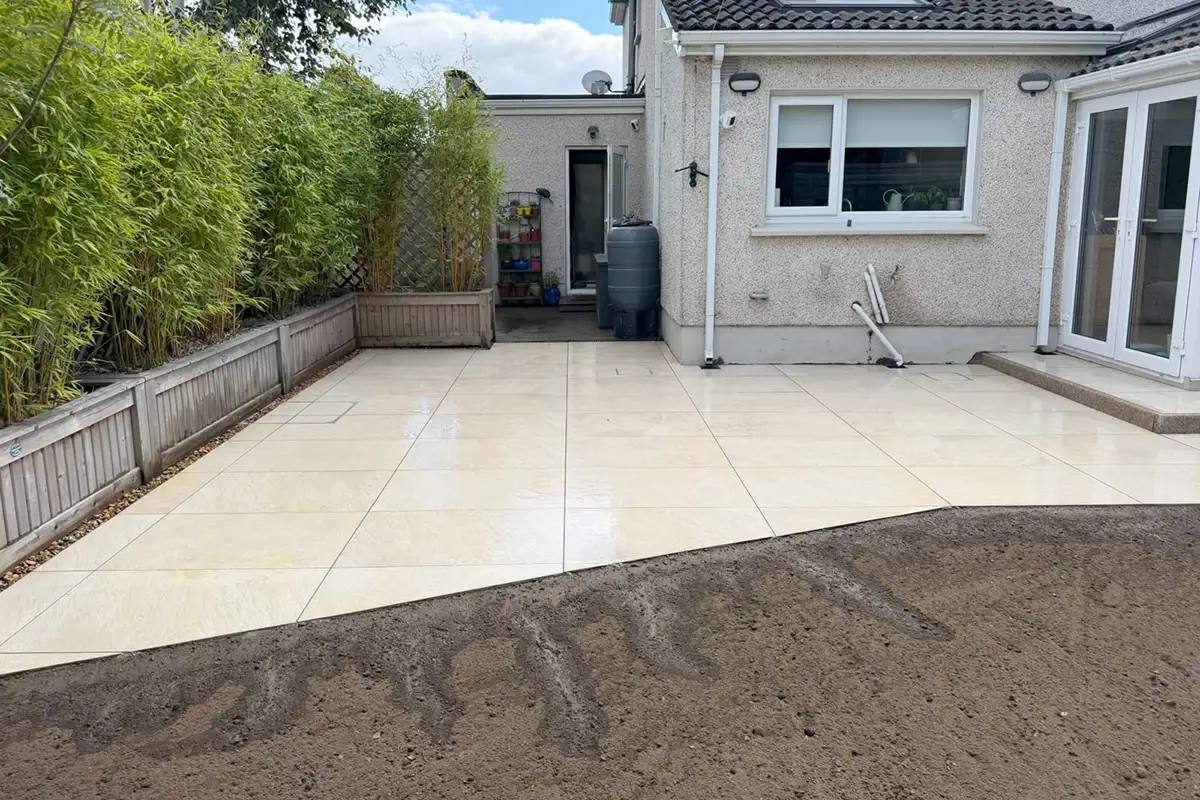
A Completed Porcelain Patio in Orlagh Downs
Our Orlagh Downs, Dublin 16 project shows a completed porcelain patio installed by Driveways 4 You.
The work focused on preparation, layout and finishing to create a practical outdoor area. As with any installation, ongoing care should follow the requirements of the selected tiles and jointing materials.
Browse our completed patio projects for other examples of layouts, paths, borders and entrance details.
When Should You Ask for Advice?
Contact your installer if you notice:
- A tile moving or rocking underfoot
- A new crack or damaged edge
- Joint material repeatedly coming away
- Persistent water collecting in one area
- A stain that approved routine cleaning does not remove
Take an overall photograph and a close-up, and explain when the issue appeared. Include any cleaning products already used.
Porcelain Patios from Driveways 4 You
Our experienced in-house team installs patios from preparation through to completion, with no subcontractors involved.
Explore our porcelain patio installation service, read our Dublin patio cost guide or compare materials in our porcelain versus natural stone guide.
For advice about an installation we have completed, contact us with your project details and photographs.




 CHAT

